
Every year, over 54 million Americans get joint injections for chronic pain. Studies show 75% feel better in just 48 hours. This makes these treatments a top choice for those seeking non-surgical relief.
Joint injections put powerful medicines right where it hurts, like the knee, shoulder, or hip. These simple procedures help people avoid surgery and find relief from pain. Medical centers like MedStar Health say patients can get back to their daily lives faster than with surgery.
The magic of arthritis injections is their precision. Doctors can target the pain source, not the whole body. Dr. Joanne Borg Stein from Mass General Brigham says mixing these treatments with therapy leads to the best results for those with long-term pain.
Whether it’s from sports injuries, aging, or inflammation, joint injections might be the answer. They help with pain in the hip, knee, and shoulder. This gives millions of Americans a second chance at life, without the risks and downtime of surgery.
Key Takeaways
- Joint injections provide pain relief for 75% of patients within 48 hours
- These minimally invasive procedures target knee, shoulder, and hip pain directly
- Arthritis injections deliver medication precisely where needed without surgery
- Best results occur when combined with rehabilitation therapy
- Patients typically return to daily activities faster than with surgical options
- Treatment works for various conditions including sports injuries and age-related wear
What Are Joint Injections?
Joint injections put medicine right into painful joints to ease pain and improve movement. These small procedures aim at spots where pain and swelling make daily tasks hard. Doctors use knee, shoulder, and hip injections to help without surgery.
Definition and Purpose
A joint injection involves putting a needle into the joint to add medicine. The main aims are to lessen pain, reduce swelling, and enhance joint function. This method delivers medicine directly to the source, avoiding the digestive system and bloodstream for quicker relief.
Common Types of Joint Injections
There are many injection types for joint pain:
- Corticosteroid injections – Mix strong anti-inflammatory steroids with local anesthetics to quickly cut swelling and pain in joints like hips.
- Hyaluronic acid injections – Work as a lubricant and shock absorber, great for knees when other treatments fail.
- Platelet-rich plasma (PRP) – Uses your own blood’s platelets to boost natural healing in shoulders and other areas.
- Placental tissue matrix (PTM) – Contains growth factors and stem cells from donated placental tissue to aid in tissue repair.
Each type has its own benefits, depending on your condition and treatment goals. Your doctor will suggest the best one for you based on your symptoms, medical history, and past treatments.
Conditions Treated with Joint Injections
Joint injections are a great way to treat many painful conditions in the musculoskeletal system. They deliver medicine right to the source of pain. This helps when other treatments don’t work.
They are good for both long-term and sudden joint problems. Cortisone injections help people move better and feel less pain in their joints.
Osteoarthritis
Osteoarthritis is helped a lot by direct joint injection therapy. This is true for joints that bear a lot of weight, like knees and hips. Over time, cartilage wears down, causing bones to rub together painfully.
Cortisone injections cut down on inflammation inside the joint. This can give relief for months. People often notice they can move better and feel less stiff after treatment.
Rheumatoid Arthritis
Rheumatoid arthritis is different because it’s an autoimmune disease. It makes the immune system attack joint tissue. This leads to severe inflammation and damage to joints all over the body.
Joint injections can help control flare-ups and protect joints from more damage. Many find these injections very helpful when their disease is active.
Bursitis
Bursae are small sacs filled with fluid that cushion bones, tendons, and muscles near joints. When they get inflamed, moving becomes painful and hard. Cortisone injections into the bursa quickly reduce swelling and help joints work normally again.
Common places for this treatment are the shoulders, elbows, and hips.
Tendonitis
Tendonitis happens when tendons get inflamed from repeated motions or sudden injuries. It can cause problems like tennis elbow or rotator cuff issues. Injections target the inflamed tissue around tendons, delivering medicine right where it’s needed.
This precise method often works when pills don’t help enough.
How Joint Injections Work
Joint injection therapy aims to reduce pain and swelling right at the source. It delivers medicine directly into the joint, avoiding the digestive system for quicker relief. Knowing how arthritis injections work helps patients choose the best treatment for them.
Mechanism of Action
Joint injection therapy uses different methods to treat pain. Corticosteroids, for example, cut down inflammation by stopping pain signals. These anti-inflammatory drugs start working in 24 to 48 hours.
Hyaluronic acid injections, on the other hand, replace lost joint fluid. This fluid, like motor oil, helps joints move smoothly. When arthritis depletes this fluid, the injections help restore it.

Medications Used
Arthritis injections use various medications for different goals. Each one has its own benefits, depending on the patient’s needs and how severe their condition is.
| Medication Type | Active Ingredient | Duration of Relief |
|---|---|---|
| Corticosteroids | Methylprednisolone, Triamcinolone | 2-3 months |
| Hyaluronic Acid | Synvisc, Euflexxa | 6-12 months |
| PRP | Patient’s concentrated platelets | 3-9 months |
| Prolotherapy | Dextrose solution | 4-6 months |
New treatments like platelet-rich plasma and cell therapies are also available. PRP uses your own blood’s healing factors, while cell therapies use cells from bone marrow or fat. These options aim to fix damaged tissue, not just cover up symptoms.
Benefits of Joint Injections
Joint injections are a gentle way to fight chronic pain without surgery. They send medicine straight to the problem spots. This gives targeted relief that pills can’t always provide. People with knee, shoulder, or hip pain find them very helpful.
Immediate Pain Relief
Joint injections work fast to ease symptoms. Steroid shots start to help in days or weeks. This means people can get back to their daily lives and even start physical therapy without pain.
Medicine goes right to the joint, making it very effective. Unlike pills that travel all over the body, injections hit the pain spot. This can give relief for months with just one shot.
Reduced Inflammation
Joint injections are great at cutting down inflammation. Platelet-rich plasma (PRP) and placental shots use the body’s own healing stuff. They use blood platelets and stem cells to fix tissues and calm inflammation.
These shots make joints move better and feel less stiff. People can stretch and exercise more easily. The benefits can last for months or even years after treatment.
Risks and Side Effects
Joint injections can greatly reduce pain for many people. But, knowing the risks is key to making a smart choice. Most folks do well with cortisone and hip injections. Yet, it’s good to know about possible side effects to watch out for.
Common Side Effects
Most side effects are mild and go away in a few days. People getting cortisone shots might feel some discomfort at the site. You might see a bit of swelling or warmth around the joint.
A *cortisone flare* can happen in about 2% of cases. It causes more pain for 24-48 hours before it starts to get better.
- Facial flushing lasting 1-2 days
- Temporary elevation in blood sugar levels
- Minor bleeding or bruising at the injection site
- Skin lightening near the injection area
Rare Complications
Severe problems from hip injections are rare, thanks to skilled doctors. Infection is very rare, affecting less than 1 in 15,000. Look out for fever, more pain, or unusual drainage from the site.
Long-term, repeated cortisone shots might harm cartilage. Doctors now suggest no more than 3-4 shots a year in the same joint. This helps balance pain relief with possible tissue harm. Options like platelet-rich plasma or hyaluronic acid injections are safer for those needing more treatments.
Who Is a Candidate for Joint Injections?
Not everyone with joint pain is right for joint injection therapy. Doctors look closely at each patient to see if this treatment is good for them. They consider your health, how bad your condition is, and if other treatments worked.
Age Considerations
Joint injection therapy helps adults of all ages. Young people with sports injuries or early arthritis often get great results. Middle-aged folks with wear-and-tear damage find relief without surgery.
Older adults with moderate arthritis also benefit. They get help when pills aren’t enough but surgery is too risky.

Medical History
Your past health matters a lot. *Ideal candidates* have tried other treatments first. This includes:
- Regular exercise and physical therapy
- Anti-inflammatory medications
- Proper rest and nutrition
- Previous steroid injections with limited success
Those with mild to moderate osteoarthritis in joints like the knee or hip do well. People with pain from a single injury are also good candidates. But, those with diabetes, bleeding disorders, or infections need careful thought before treatment.
How to Prepare for a Joint Injection
Preparing for joint injections is simple. Just follow a few easy steps to make your visit smooth. Your doctor will give you specific instructions based on your needs and the type of injection. Being prepared makes you feel more at ease during your appointment.
Pre-Treatment Guidelines
You don’t need to do much before your joint injections. You can eat and drink as usual. Wear loose, comfy clothes to make it easier for your doctor to reach the injection spot. If you’re getting knee injections, wear shorts or pants that can roll up.
Before you go, write down all the medicines you’re taking. This helps your doctor avoid any bad reactions. Also, tell them about any allergies, like to medicines or latex.
Discussing Medications with Providers
Talking to your doctor about the injections is key. They’ll look at your medical history and if you’ve tried other treatments. Many insurance plans need proof that you’ve tried other options before covering injections.
Ask about payment options too. Some injections might not be FDA-approved for certain uses. Knowing the costs ahead of time avoids surprises. Your doctor will also tell you what to expect during recovery and how it fits into your care plan.
The Procedure: What to Expect
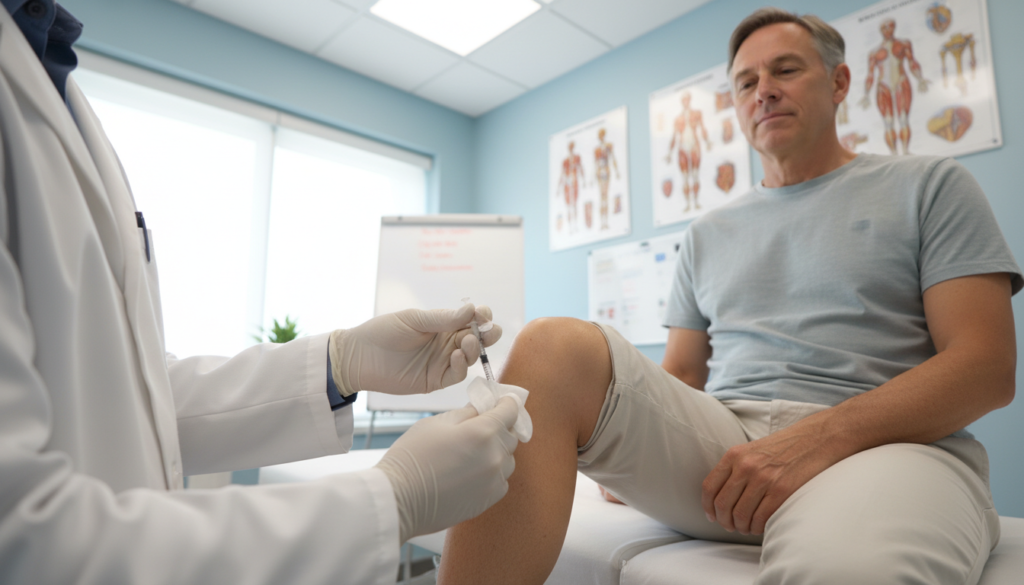
Knee injections for joint pain relief usually take 30 minutes to an hour. The process includes preparation, the injection, and a short observation period. Doctors use advanced imaging to place the medication accurately.
Examination and Diagnosis
Your doctor will first check the painful joint and look at your medical history. X-ray guidance helps find the right spot for treatment. You’ll get IV medication to relax during the procedure.
The medical team will place you on an X-ray table. You can lie comfortably while they prepare the injection site.
The Injection Process
The doctor will apply a topical anesthetic to numb the skin around your joint. A small amount of contrast dye is injected first. This dye shows up on X-ray images and guides the needle.
The physician then inserts the needle and delivers the medication. It goes directly into the joint space or surrounding tissues.
| Procedure Step | Time Required | Purpose |
|---|---|---|
| Patient positioning | 5 minutes | Ensures comfort and access |
| Anesthetic application | 2-3 minutes | Numbs injection site |
| Contrast dye injection | 2 minutes | Guides needle placement |
| Medication delivery | 5 minutes | Provides joint pain relief |
| Recovery observation | 15-20 minutes | Monitors patient response |
Recovery After Joint Injections
The recovery after joint injections is usually quick and easy. Most people go home the same day and can get back to normal in 24 hours. The time it takes to recover depends on the type of injection and personal factors. Knowing what to expect can help get the best results from your treatment.
Post-Procedure Care
Rest the treated area for 24 hours after the injection. Use ice packs for 20 minutes to reduce swelling. For the first two days, avoid hard activities but walk lightly to keep moving.
Physical therapy is key during pain-free times. A therapist can help with exercises that improve relief and mobility. These exercises strengthen the muscles around the joint, supporting it better and possibly extending the injection’s benefits.
Expected Outcomes
Pain relief from joint injections may not happen right away. Some see improvement in days, while others may take up to a week. Different injections offer different levels of – corticosteroids work in a month, while newer treatments may take six months to show full effects.
How long pain relief lasts varies a lot. Many people enjoy months of less pain and better function. Some may feel relief for up to a year, thanks to injections and physical therapy. Regular check-ups with your doctor are important to see how you’re doing and if more treatment is needed.
Alternatives to Joint Injections
Cortisone injections help many people with joint pain. But they work best with a full treatment plan. There are other ways to manage pain without injections or to make injections more effective.
Physical Therapy
Physical therapy is key for joint pain. Therapists create exercises to strengthen muscles and improve flexibility. These exercises help stabilize the joint and reduce stress on damaged cartilage.
Many find that regular physical therapy reduces their need for cortisone injections. Occupational therapy helps with daily activities. Therapists teach modified movements and suggest assistive devices to protect joints.
Medications
Over-the-counter pain relievers are a good start for joint discomfort. Acetaminophen helps with mild pain, and NSAIDs like ibuprofen reduce pain and inflammation. Doctors often suggest trying these before injections.
Prescription medications are stronger for severe cases. Topical creams with capsaicin or menthol offer targeted relief without side effects.
Surgery
When other treatments fail, joint replacement surgery is needed. Those with advanced arthritis who don’t respond to injections may need knee, hip, or shoulder replacements. Arthroscopic surgery is a less invasive option for removing damaged tissue or repairing torn cartilage.
The choice for surgery depends on pain level, joint damage, and daily activity impact. Most insurance plans require trying other treatments first before approving surgery.
Cost of Joint Injections
The cost of joint injection therapy is a big factor in treatment choices. Prices change based on the type of injection, where you are, and whether it’s at a hospital or private clinic. Knowing these costs and insurance policies helps patients make better choices about their care.
Average Pricing
Joint injections can cost a lot or a little, depending on the treatment. Basic cortisone shots usually cost between $100 and $300 per shot without insurance. These steroid injections are the cheapest way to get quick pain relief.
Hyaluronic acid injections for knee arthritis are more expensive, costing $500 to $1,500 per shot. With three to five shots needed, the total cost can be $7,500. Platelet-rich plasma (PRP) treatments cost between $500 and $2,500 per session. Stem cell therapies can cost over $5,000 per treatment.
Insurance Coverage
Insurance companies have different rules for covering joint injection therapy. Most plans cover cortisone injections for inflammation and pain first. Medicare and private insurers usually approve these basic steroid shots after a proper diagnosis.
Coverage for hyaluronic acid gel injections varies by plan. Many insurers cover these for knee osteoarthritis, and some now cover shoulder treatments too. But, experimental treatments like PRP and stem cell therapies rarely get insurance approval. Patients usually have to pay for these themselves.
Before getting joint injections, check with your insurance to see what’s covered. Ask about deductibles, co-payments, and if you need pre-authorization. Knowing this ahead of time helps avoid surprise bills and lets you plan your treatment financially.
Frequently Asked Questions about Joint Injections
People looking for joint pain relief through injections often wonder about treatment duration and how often they can get it. Knowing these details helps set realistic hopes for managing long-term conditions like arthritis.
How Long Do Results Last?
The time relief from joint injections lasts varies. It depends on the treatment and your condition. For minor injuries, cortisone shots might last a long time. But for chronic conditions, relief usually lasts about three months.
Gel injections, like hyaluronic acid, can last six to twelve months. Platelet-rich plasma (PRP) and prolotherapy treatments can last even longer, sometimes years.
- Severity of the underlying condition
- Type of injection received
- Individual healing response
- Activity level and lifestyle modifications
Can Injections Be Repeated?
Some arthritis injections can be repeated, but each type has its own rules. Steroid injections need careful watching because they can harm cartilage and have systemic effects. Most doctors limit cortisone shots to three or four per year in one joint.
Viscosupplementation and PRP treatments can be repeated more often. Your doctor will check how you react to the first treatment and suggest when to get more. Many people manage joint pain by getting injections regularly, along with physical therapy and making lifestyle changes.
Patient Testimonials and Success Stories
People all over the country have seen big changes thanks to joint injections. Their stories show how these treatments can change lives. This happens when they also make lifestyle changes and get the right physical therapy.
Personal Experiences
Many have felt a big difference after getting knee injections for osteoarthritis. A Boston patient could climb stairs again without pain after years. This was thanks to the injections and physical therapy.
Those with sacroiliac joint pain have also seen big improvements. Dr. Joanne Borg-Stein at Spaulding Rehabilitation Hospital has seen many success stories. These ligaments respond well to regenerative therapies, even after frequent injuries.
Impact on Quality of Life
Patients at Mass General Brigham who got hip injections say they feel better every day. Cell therapies help the body heal itself, improving joint health over time. Studies show these treatments work best when patients stay healthy before and after.
The best results come when patients:
- Follow their rehab plans
- Keep a healthy weight
- Stay active but not too hard
- Go to all their follow-up visits
These stories show that joint injections can really help. They work best as part of a complete treatment plan.
Conclusion: Is a Joint Injection Right for You?
Thinking about getting joint injections is a big decision. It’s important to consider your condition and what you hope to achieve. Many people find relief from joint inflammation through injections. But, success depends on several things.
Your health, how committed you are to rehabilitation, and how severe your condition are key. These factors help determine how well you’ll do.
Making the Decision
Before you decide on shoulder injections or other treatments, do your homework. Look into the clinic and the doctor you’ll see. Some places might make promises they can’t keep, so check their credentials and safety record.
Ask your doctor about the science behind the injections for your condition. Find out how long the relief might last and how many people see improvement. The best results come when you also do physical therapy and make lifestyle changes after the injection.
Consulting with a Healthcare Provider
Dr. Joanne Borg-Stein from Spaulding Rehabilitation Hospital says patients should be involved in their treatment plans. Have a detailed talk with your doctor about your symptoms, medical history, and what you hope to get from treatment. They should explain all your options, including injections and other therapies.
Ask about the medication they suggest and why it’s right for you. A good doctor will tell you both the good and the bad about injections. This helps you make a well-informed choice.