
Every year, 126 million Americans wake up with chronic pain. This pain lasts more than three months. It’s one of the top reasons people go to the doctor. Physical therapy is a strong solution that fights pain at its source. It doesn’t use medicines or surgery.
Physical therapy changes lives by fixing pain’s root causes. It uses special exercises and hands-on methods. This field helps patients get their strength, flexibility, and freedom back. Every recovery starts with a detailed look at your health and symptoms.
The best thing about physical therapy is how it’s tailored to you. Your therapist makes a plan just for you. It includes exercises and manual therapy to get your body working right again.
Recovery through physical therapy is more than just easing pain. It builds your confidence and lets you do the things you love again. Whether it’s back pain, surgery recovery, or managing a long-term condition, this method offers lasting relief.
Key Takeaways
- Physical therapy treats 126 million Americans suffering from chronic pain each year
- Treatment addresses root causes of pain without medication dependency
- Customized recovery plans combine exercises with manual therapy techniques
- Pain management through physical therapy improves strength and flexibility
- Each treatment begins with a thorough check of symptoms and medical history
- Recovery goals focus on restoring natural body function and movement
Understanding Physical Therapy
Physical therapy is a key part of healthcare today. It helps people regain their strength and independence. This field uses science and personalized care to tackle pain and movement issues. Patients find that rehabilitation services through physical therapy offer a way to heal without needing lots of meds or surgery.
Definition of Physical Therapy
Physical therapy is a healthcare field that deals with physical problems. It uses movement-based treatments. Physical therapists help patients recover from injuries, surgeries, or long-term conditions that make moving hard.
They use proven methods to help the body heal. They also teach patients how to avoid future problems.
Overview of Techniques
Physical therapists use many treatment methods, each tailored to the patient. Therapeutic exercises like stretching and strengthening are common. They also use hands-on treatments like joint mobilization and soft tissue massage.
Many clinics also use advanced tools like electrical stimulation and ultrasound. These help with healing and pain relief.
Goals of Physical Therapy
The main goals of physical therapy are to restore normal movement and reduce pain. Therapists aim to improve blood flow, reduce swelling, and strengthen muscles. Each plan is designed to help patients get back to their daily lives.
They also teach patients how to move safely to avoid future injuries.
The Role of Physical Therapy in Pain Management
Physical therapy is key in treating pain without just using medicine. It uses special techniques and exercises to lessen pain and help patients move better. A detailed movement assessment is the first step. It helps find the pain’s source and creates a plan for recovery.
Types of Pain Treated
Physical therapists help with many pain types that impact daily life. These include:
- Lower back pain affecting 80% of adults at some point
- Neck pain from poor posture or whiplash injuries
- Arthritis-related joint discomfort
- Nerve pain from conditions like sciatica
- Post-surgical pain during recovery
Each pain type needs a specific treatment. Therapists use hands-on methods to ease muscle tension and improve joint movement. They also teach how to move correctly to avoid future pain.
Importance of Early Intervention
Starting physical therapy early can prevent pain from becoming a long-term issue. Early pain management stops other parts of the body from getting hurt. For example, if you favor an injured knee, your hip and back might suffer.
Studies show starting therapy within 14 days of pain helps patients recover faster. Early movement assessment catches bad movement patterns early. This approach saves money and prevents long-term disability.
How Physical Therapy Aids Recovery
Physical therapy is key in helping patients get back on their feet after surgery or injury. It focuses on healing specific areas and building overall strength. Each person’s recovery path is different, but physical therapists use proven methods to help them heal safely and well.
Rehabilitation After Surgery
Recovering from surgery needs careful attention to avoid complications and ensure healing. Physical therapists work with patients after surgeries like knee replacements and spinal fusions. They start with gentle exercises to reduce swelling and prevent blood clots.
As healing advances, therapists use scar tissue massage to help move freely again. The time needed for recovery varies by surgery. Hip replacement patients might walk with help within a day. ACL reconstruction takes 6 to 9 months to fully recover. Spinal surgery patients work on core strength and body mechanics for 8-12 weeks.

Injury Recovery Protocols
Sports injuries and accidents need specific treatment plans. Ankle sprains heal in 2-4 weeks with the RICE method and balance exercises. Muscle strains get better with stretching and strengthening over 3-6 weeks. Physical therapists adjust treatments based on how well the body is healing.
Restoring Range of Motion
Mobility restoration aims to get joints moving like before. Therapists use techniques to stretch tight tissues. Patients do exercises at home to keep up the good work.
Success in recovery comes from regular practice and slowly increasing the challenge.
The Benefits of Physical Therapy
Physical therapy helps patients find lasting relief and better daily life. It targets pain’s root causes, building strength and flexibility. Those who stick to their plans often see big changes, beyond just pain relief.
Decreased Pain Levels
Physical therapy cuts pain with special exercises and techniques. Therapists use movement to boost blood flow to injured spots, speeding healing. Manual therapy loosens tight muscles and enhances joint movement.
Improved Mobility and Function
Regular sessions boost daily activity mobility. Therapists craft exercises for weak spots and balance. Patients learn to move safely to avoid injuries.
Stretching, strengthening, and manual therapy restore natural movement.
| Mobility Improvement | Timeline | Patient Success Rate |
|---|---|---|
| Walking Distance | 4-6 weeks | 85% |
| Stair Climbing | 6-8 weeks | 78% |
| Balance Control | 3-5 weeks | 82% |
Enhanced Quality of Life
Therapy brings better sleep and more energy. Patients can enjoy hobbies and activities again. Independence in daily tasks grows with strength and confidence.
Physical therapy lets patients manage their health, not just rely on meds.
Common Conditions Treated with Physical Therapy
Physical therapy helps millions of Americans each year. It treats chronic pain and acute injuries. Physical therapists create plans to restore function and reduce pain.
Musculoskeletal Disorders
Orthopedic rehabilitation helps with bone, muscle, and joint issues. Physical therapists help patients with osteoarthritis stay flexible. They also help those with rheumatoid arthritis keep their joints moving without pain.
Back pain management is a big reason for physical therapy visits. People with back problems get exercises to strengthen muscles and improve flexibility.
Neurological Conditions
Neurological disorders see big improvements with therapy. Stroke survivors get better with movement training. Those with Parkinson’s learn to balance better, reducing falls.
Multiple sclerosis patients stay independent longer with special exercises.
Sports Injuries
Sports injury recovery needs sport-specific plans. Runners and swimmers get different treatments. Physical therapists create programs that help with healing and improving performance.
Postural Issues
Poor posture leads to chronic pain and mobility issues. Physical therapists teach proper body mechanics. This helps prevent future injuries and reduces muscle and joint strain.
The Physical Therapy Process
Starting physical therapy is a big step towards feeling better and managing pain. Each person’s path starts with a detailed plan to find out what they need. Physical therapists use tested methods to help you get better.
Initial Evaluation and Assessment
Your first visit is a thorough Movement Assessment by a skilled physical therapist. They look at your health history, symptoms, and what you can do. They check your strength, flexibility, balance, and how you move.
They watch how you walk, bend, and reach. This helps them find out where you might be in pain. This detailed check is the start of your treatment plan.

Developing a Treatment Plan
Your therapist makes a personalized treatment strategy based on what they found. This plan includes exercises, manual therapy, and ways to manage pain. Each part is aimed at fixing specific issues found during your Movement Assessment.
Your treatment plan changes as you get better. Your therapist picks methods that work for you and fit your life and goals.
Setting Goals for Recovery
Having clear goals is important for your recovery. Your therapist helps you set both short and long-term goals. These might be to lessen pain, go back to work, or do things you love again.
They check on your progress and adjust your goals as needed. This keeps your treatment on track with your recovery goals.
Manual Therapy Techniques
Manual therapy is key in physical rehab programs. It uses hands-on methods to help your body move better and feel less pain. Physical therapists use their hands to check and fix problems in muscles, joints, and tissues that stop you from doing daily tasks.
What is Manual Therapy?
Manual therapy includes many hands-on treatments used by physical therapists. These methods involve specific movements on your body’s joints and soft tissues. Unlike just sitting back and getting treated, manual therapy often pairs with exercises for better results.
Benefits of Hands-On Techniques
Manual therapy offers quick and lasting benefits for healing. The main advantages are:
- Improved blood flow to injured spots
- Relief from muscle tension and trigger points
- Less inflammation and swelling
- More flexible joints and better movement
- Helps tissues heal faster with more nutrients
These benefits, along with exercises, speed up your recovery and boost your function.
Examples of Manual Therapy
Physical therapists use several evidence-based manual therapy methods based on your condition:
- Joint mobilization – Gentle moves to fix joint issues
- Soft tissue mobilization – Direct pressure to loosen muscle tightness
- Myofascial release – Long, steady pressure to release fascial adhesions
- Therapeutic massage – Rhythmic actions to aid in relaxation and healing
Exercise in Physical Therapy
Exercise is key in most physical therapy plans. It helps when pain or injury makes moving hard. Physical therapists create special exercise plans for each patient.
Importance of Exercise Prescription
Just like medicine, exercises need the right amount. Physical therapists check muscle strength and joint stiffness before planning exercises. The right exercises at the right time help heal faster.
Too much too soon can make pain worse. Too little slows healing down.
Exercise prescription looks at:
- Current pain levels and tissue healing stage
- Patient’s overall fitness and medical history
- Specific movement goals for daily activities
- Balance between rest and activity
Types of Exercises Used
Physical therapy uses many exercise types for recovery. Stretching exercises make muscles more flexible and reduce tension. Strengthening exercises help weak muscles that cause pain or bad posture. Balance training prevents falls and boosts coordination.
Common exercises include range-of-motion activities, resistance training, and aerobic exercises like walking or cycling. Water therapy is also used for those with severe joint pain. Each exercise focuses on different areas to help overall recovery.
Progressive Loading Techniques
Recovery is slow but steady with progressive loading. Physical therapists start with easy movements that don’t hurt. As healing and strength grow, exercises get harder step by step.
Innovative Technologies in Physical Therapy
Modern physical therapy has moved beyond just hands-on care. Today, clinics use the latest technology to improve pain management and speed up healing. These tools work with traditional methods to give patients full care for many conditions.
Use of Ultrasound Therapy
Ultrasound therapy uses sound waves to treat deep tissue injuries. These waves create heat that goes deep into muscles and joints. This heat reduces swelling and boosts blood flow.
It’s great for treating tendonitis, bursitis, and muscle strains. Many rehabilitation services use it to help tissues heal faster and feel less stiff.
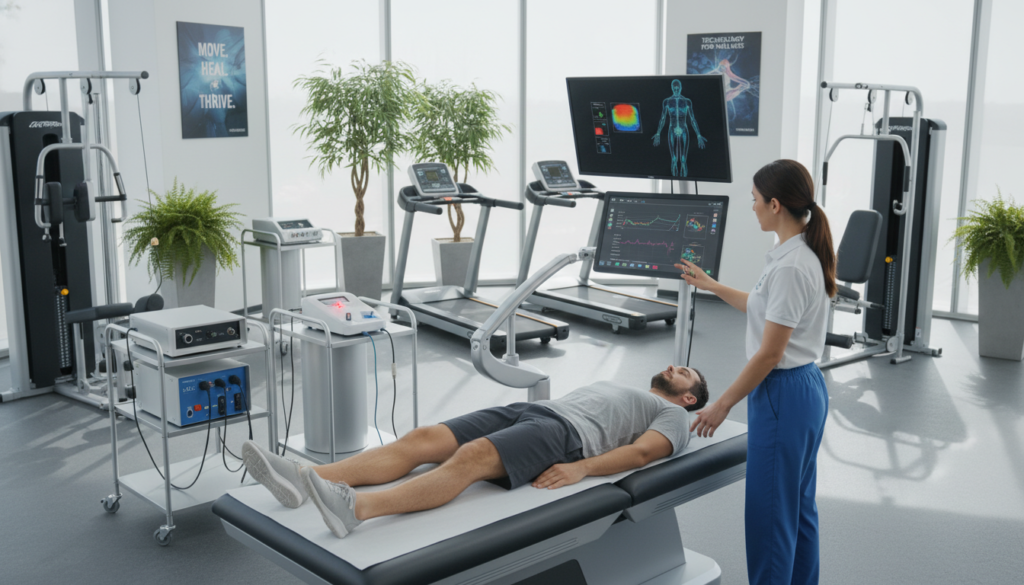
Electrical Stimulation Methods
Electrical stimulation sends pulses through the skin to target nerves and muscles. TENS units block pain signals to the brain, giving quick relief. E-stim therapy also helps rebuild muscle strength after injuries or surgery.
Athletes often use it to keep their muscles strong while recovering. This helps prevent muscle loss.
Virtual Reality Therapy Applications
Virtual reality (VR) is changing how therapists manage pain and teach movement. Patients wear VR headsets to practice in fun, game-like settings. This helps stroke survivors learn motor skills again.
It also helps those with chronic pain by distracting them from pain. VR makes exercises fun, so patients are more likely to stick with their recovery plans.
Patient Education and Empowerment
Physical therapists do more than treat injuries. They teach patients how to take charge of their own recovery. When patients understand their condition and learn self-care techniques, they become active participants in their healing journey. This partnership between therapist and patient creates better outcomes and lasting results.
Importance of Patient Involvement
Active patient participation speeds up recovery and prevents future problems. During Movement Assessment sessions, therapists explain what they find and why it matters. Patients who understand their body mechanics make better daily choices.
They learn to recognize warning signs like muscle fatigue versus joint stiffness. This knowledge helps them avoid activities that might cause setbacks while safely pushing toward recovery goals.
Strategies for Self-Management of Pain
Effective Pain Management starts with simple daily habits. Therapists teach proper lifting techniques, sitting postures, and sleeping positions. Patients learn breathing exercises that calm the nervous system and reduce tension.
Diet changes like eating anti-inflammatory foods can decrease pain naturally. Stress reduction techniques such as meditation or gentle stretching provide relief without medication.
- Apply ice or heat at the right times
- Practice prescribed exercises consistently
- Modify activities before pain increases
- Use proper ergonomics at work and home
Resources for Continued Learning
Education doesn’t stop when therapy ends. Many clinics offer workshops on specific conditions like back pain or arthritis. Online platforms provide exercise videos and educational materials.
Support groups connect patients facing similar challenges. Physical therapists often recommend books, apps, and websites that reinforce proper techniques and provide ongoing guidance for independent Pain Management.
Building a Support System for Recovery
Having a strong support network is key to a successful post-surgical recovery. Physical therapy works better when patients get support from loved ones. Working with many healthcare professionals also helps.
This teamwork keeps patients motivated and on track. It leads to better recovery results.
Involving Family and Friends
Family and friends can greatly impact your rehabilitation services journey. They offer more than just emotional support. They can help in many ways:
- Helping you do home exercises right
- Driving you to physical therapy
- Tracking your progress and celebrating wins
- Making your home safe for moving around
- Keeping you positive during tough times
Research shows family help leads to less pain and quicker healing. Ask your loved ones to join therapy sessions. This way, they learn how to help you safely at home.
Working with Other Healthcare Providers
Physical therapists work closely with your medical team for full post-surgical recovery care. They team up with surgeons, doctors, occupational therapists, and pain specialists. Each brings their own skills to help you heal.
Your physical therapist connects your care with other rehabilitation services. They share updates and adjust plans based on feedback. This ensures everyone is working towards the same goals without conflicting advice.
The Importance of Consistency in Treatment
Success in physical therapy comes from regular treatment and sticking to your recovery plan. Those who go to sessions often and do home exercises see better pain relief and mobility. Missing sessions or skipping exercises can slow down your progress and even cause setbacks.
Establishing a Routine
Having a set schedule for physical therapy boosts your recovery. Make sure to schedule sessions and home exercises at the same time every week. Many people find success by:
- Scheduling sessions at the same time each week
- Setting daily reminders for home exercises
- Preparing exercise space in advance
- Keeping a dedicated calendar for treatment activities
Your therapist creates a treatment plan that balances rest and activity. Too much rest can lead to new pain problems. Early movement helps with healing and is key for the best results.
Tracking Progress Over Time
Keeping a record of your recovery helps you and your therapist see how far you’ve come. Note your pain levels, range of motion, and easier activities. Regular checks during physical therapy show how strong you’re getting. This helps find what works best for you and makes quick changes when needed.
How to Choose a Physical Therapist
Finding the right physical therapist is key to your recovery. Whether it’s after surgery or sports injury, a good therapist makes a big difference. They create a plan just for you, helping you get back to your daily life safely.
Credentials to Look For
Every physical therapist should have a Doctor of Physical Therapy (DPT) degree. They must also have a valid state license. Look for therapists with board certifications from the American Board of Physical Therapy Specialties. These show they’ve had extra training.
Check if your therapist is part of groups like the American Physical Therapy Association. Being a member shows they keep up with the latest in their field. Many therapists also get extra certifications in things like dry needling or special exercises.
Specializations in Physical Therapy
Physical therapists often focus on certain areas. For orthopedic care, look for those who work with joint replacements and fractures. Sports injury specialists know how to help athletes get back in the game.
Some common specializations include:
- Orthopedic physical therapy
- Sports physical therapy
- Neurological rehabilitation
- Pediatric therapy
- Geriatric care
Questions to Ask During Consultations
Ask about the therapist’s experience with your condition during your first visit. Find out how they plan to help you and how long it might take. Knowing their approach helps you see if it fits your goals.
Also, ask how they track your progress and adjust the plan as needed. This shows they’re committed to helping you get better.
Insurance and Payment Options for Physical Therapy
Understanding the financial side of physical therapy can be tough. But knowing your payment options makes planning easier. Most insurance plans cover rehabilitation services, making treatment more affordable. This lets you focus on getting better without worrying about money.
Understanding Coverage Plans
Insurance for physical therapy varies a lot. Private insurance, Medicare, and Medicaid usually cover it when it’s needed. Your plan might help with recovery after surgery, chronic pain, or injuries. Always check with your provider about what’s covered and any limits.
Out-of-Pocket Costs
Even with insurance, you might pay some for physical therapy. Common costs include:
- Deductibles that must be met before coverage begins
- Copayments for each visit
- Coinsurance percentages
- Costs for treatments exceeding visit limits
| Payment Type | Typical Range | When Applied |
|---|---|---|
| Copayment | $10-$50 | Each visit |
| Coinsurance | 10%-40% | After deductible |
| Cash Pay Rate | $75-$150 | Without insurance |
Financial Assistance Resources
Many clinics offer flexible payment plans. You might find sliding scale fees or cash discounts. Some places work with CareCredit or Compassionate Finance for financing. Community health centers also offer lower-cost physical therapy for those who qualify.
Future Trends in Physical Therapy Practices
Physical therapy is on the verge of a new era. Breakthrough research and advanced techniques are changing patient care. These innovations mix old methods like manual therapy with new tech for personalized plans.
Advances in Research and Techniques
Research from places like the Mayo Clinic and Johns Hopkins is changing physical therapy. Scientists are finding new ways to use manual therapy and exercises for better results. Now, therapists can track progress more accurately with advanced tools.
This means patients get treatments backed by science, not just guesses.
Integration of Telehealth Services
Telehealth is changing how people get physical therapy in the U.S. Sites like BetterPT and SWORD Health offer video chats with therapists. Patients can do exercises at home with expert guidance.
This is great for those in rural areas or with mobility issues who can’t get to clinics.
Evolving Patient Care Models
The future of physical therapy is all about treating the whole person. Programs now focus on specific groups, like sports teams. They combine injury prevention, recovery, and performance improvement in one plan.
Therapists are becoming wellness coaches. They help patients achieve long-term health goals, not just fix pain.