
Doctors perform nearly 9 million epidural steroid injections each year in the U.S. to combat chronic pain. This number highlights how many Americans seek this treatment for back, neck, or nerve pain issues.
Pain relief from ESI varies widely. Some see relief for just a few days, while others enjoy months of less pain. The injection contains a steroid and a numbing agent. The numbing part works fast but fades in hours. The steroid, on the other hand, takes days to start reducing inflammation and providing lasting relief.
Managing pain with ESI is a key treatment for millions with spine-related pain. Patients often ask how long relief will last after an injection. The answer depends on several factors, including the condition, overall health, and body response to the medication.
Epidural steroid injections offer a middle ground between non-invasive treatments like physical therapy and more invasive surgeries. Knowing what to expect from this procedure helps patients make better decisions about their pain management.
Key Takeaways
- Pain relief duration ranges from several days to multiple months depending on individual factors
- Approximately 9 million ESI procedures happen annually in the United States
- The numbing medicine provides immediate relief lasting only a few hours
- Steroid medication takes several days to reduce inflammation and provide lasting effects
- Individual response to epidural steroid injections varies based on health and condition severity
- ESI serves as an effective bridge between conservative care and surgical intervention
Understanding ESI: What is Epidural Steroid Injection?
Chronic pain can really disrupt your life. An epidural steroid injection is a targeted way to manage pain in your neck, back, arms, or legs. It’s a minimally invasive treatment that has helped many people avoid surgery.
Definition of ESI
An epidural steroid injection puts anti-inflammatory medicine near your spinal cord. This area protects your spinal cord with fat, blood vessels, and nerves. The ESI procedure explained is simple: a doctor uses a thin needle to inject corticosteroids right where the pain is.
Unlike epidural anesthesia used during childbirth, ESI uses steroids to fight inflammation. This method targets the root of the pain, unlike oral medications.
Purpose and Uses of ESI
The main benefits of ESI are reducing nerve inflammation and stopping the pain cycle. Doctors suggest ESI for pain management when other treatments don’t work.
Doctors often prescribe ESI for:
- Inflamed nerve roots causing shooting pain
- Chronic neck or back pain lasting over six weeks
- Pain that interferes with rehabilitation exercises
- Avoiding or delaying spine surgery
Studies from places like Cleveland Clinic show that 50-75% of patients see a big drop in pain. This lets them do more in physical therapy and other recovery activities.
The Pain Relief Mechanism of ESI
Dealing with back or neck pain can be tough. Learning about ESI for chronic pain helps you choose the right treatment. ESI targets pain by sending medicine to inflamed nerve roots in your spine.
How ESI Works
Your spinal cord is like a highway for nerves. When nerves get compressed, like by herniated discs, pain starts. You might feel sharp pain or burning in your arms, buttocks, and legs.
The epidural injection delivers medication right to your spinal cord. This method is faster than oral meds, which have to go through your whole body.
The Role of Steroids in Pain Relief
Corticosteroids are strong anti-inflammatory agents. They reduce swelling and pressure on nerves, easing pain. Finding relief with ESI often means feeling better in one to two weeks.
Expected Outcomes
Most people see a big drop in pain for weeks to months. Some even get long-term relief. ESI not only eases pain but also helps find the source of pain. This makes pain management options with ESI very useful for treatment plans.
Factors Influencing Duration of Pain Relief
The time pain relief from ESI lasts varies a lot. Some people feel better for months, while others see relief for just weeks. Knowing what affects these differences helps patients understand what to expect when using ESI for pain.
Patient’s Overall Health
Your body’s healing power greatly affects how long ESI works. People with strong immune systems and good health often feel relief longer. Age also plays a part, with younger patients usually getting better results than older ones. Lifestyle factors like exercise, healthy eating, and enough sleep help your body heal after ESI.
Type of Condition Being Treated
Spinal problems react differently to ESI. Studies show that most spinal canal narrowing comes from ligament buildup. Patients with herniated discs often see relief for three to six months. Those with spinal stenosis might not get relief as long. Localized pain conditions in the lower back or neck might respond better than pain that spreads to arms or legs.
Number of ESI Treatments
Getting more ESI treatments can change how well they work. Mayo Clinic experts say too many injections can weaken bones and connective tissue. Most doctors only do three or four treatments a year. The first injection usually gives the longest relief. Each time after, relief might not last as long. Some people find that waiting a few months between injections helps them get better results.
Typical Timeline for Pain Relief from ESI
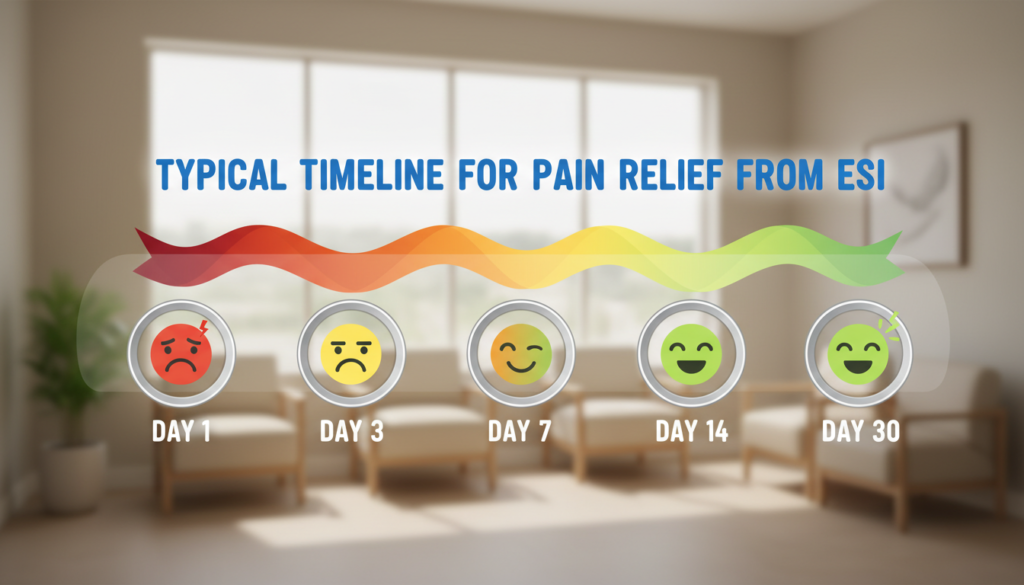
When patients get ESI for pain management, how soon they feel better varies. Knowing what to expect after the shot helps set realistic recovery goals. The benefits of ESI can take time, with some noticing changes right away and others waiting days or weeks.
Initial Relief: What to Expect
Many feel some relief right after the ESI procedure explained by their doctor. This early relief comes from the local anesthetic used. The steroid’s true effects start in 48 to 72 hours. Some feel much better in the first week, with less pain and better movement.
Longer-Term Relief and Its Variability
The length of pain relief from ESI varies a lot. Some enjoy months of less pain, while others feel relief for just weeks. About 50% of patients get lasting relief for three months or more. Factors like the condition treated and overall health play a big role.
Patterns of Pain Recurrence
Pain often comes back slowly, not suddenly. Patients might feel a bit more discomfort during certain activities first. This helps doctors know when to consider more treatments. Most doctors suggest waiting two to three weeks between injections to see the full benefits of ESI before planning next steps.
Common Conditions Treated with ESI
Doctors use epidural steroid injections to treat several spine-related conditions that cause nerve pain. When ESI for chronic pain is needed, patients have tried other treatments without success. These injections target inflammation around compressed or irritated nerves in the spine.
Herniated Discs
A herniated disc happens when the soft center of a spinal disc pushes through a crack. This can press on nearby nerves, causing pain, numbness, or weakness. Finding relief with ESI works well for herniated discs. The medication reduces inflammation directly at the problem site. Many patients see a big improvement within days of their injection.
Sciatica
Sciatica is pain that radiates along the sciatic nerve from the lower back to the legs. It affects millions of Americans each year. Pain management options with ESI provide targeted relief. They deliver anti-inflammatory medication exactly where the nerve becomes irritated or compressed.
Spinal Stenosis
Spinal stenosis occurs when spaces within the spine narrow, putting pressure on nerves. This narrowing can be due to thickened ligaments, bone spurs, or bulging discs.
| Condition | Primary Symptoms | ESI Success Rate |
|---|---|---|
| Herniated Disc | Sharp pain, numbness | 60-75% |
| Sciatica | Leg pain, burning sensation | 50-70% |
| Spinal Stenosis | Walking difficulty, cramping | 55-65% |
Side Effects of ESI
Epidural steroid injections can greatly reduce pain for many. But, it’s important to know about possible side effects. Most reactions are mild and short-lived. Understanding these can make your treatment safer and more effective.
Common Side Effects
Most side effects from these injections are mild and temporary. You might feel your legs are heavy or numb for a few hours. This feeling usually goes away in 2-8 hours. Walking during this time should be done with care and support.
- Temporary increase in pain at the injection site (1-2 days)
- Headache occurring in about 1% of patients
- Mild facial flushing lasting 24-48 hours
- Sleep disruption for 1-2 nights
- Temporary elevation in blood sugar levels
Serious Risks and Complications
Severe complications from these injections are rare, thanks to skilled doctors. The Mayo Clinic says the risks of not treating spinal conditions are higher. Repeated injections can weaken bones and tissues over time. Doctors usually limit treatments to three or four a year to avoid these risks.
| Complication | Occurrence Rate | Treatment Approach |
|---|---|---|
| Infection | Less than 0.1% | Antibiotics |
| Nerve damage | Less than 0.01% | Physical therapy |
| Bleeding | Less than 0.5% | Monitoring |
Managing Side Effects
There are simple ways to reduce discomfort after managing pain with ESI. Use ice packs on the injection site for 15 minutes at a time the first day. Rest for 24 hours before getting back to normal activities. Keeping a symptom diary can help you track your progress and share with your doctor.
The Role of ESI in Pain Management Strategies
Doctors rarely use epidural steroid injections alone for chronic pain. These injections work best as part of a complete treatment plan. This plan addresses pain from multiple angles.
When healthcare providers recommend ESI for pain management, they combine it with other proven therapies. This combination aims to maximize relief and improve daily function.
Integration with Physical Therapy
Physical therapy is key alongside epidural steroid injections. The benefits of ESI create a window of reduced pain. This allows patients to participate more actively in their rehabilitation exercises.
Many patients find they can stretch, strengthen, and move more freely after receiving an injection. This improved movement helps build core strength. It also corrects posture problems and develops better body mechanics that protect the spine from future injury.
Use in Combination with Medications
The ESI procedure explained by doctors often includes discussion about complementary medications. Patients may continue taking anti-inflammatory drugs, muscle relaxants, or nerve pain medications while receiving injections. This multi-pronged approach targets pain through different pathways in the body.
Some patients start with over-the-counter options like ibuprofen or acetaminophen before moving to prescription medications if needed.
Long-Term Pain Management Plans
Creating a sustainable pain management strategy requires careful planning beyond individual treatments. Healthcare teams develop personalized plans that might include regular injection schedules, ongoing physical therapy sessions, weight management programs, and lifestyle modifications.
These plans aim to reduce pain episodes, improve quality of life, and potentially decrease the need for more invasive procedures like surgery.
ESI vs. Other Pain Relief Options
When looking at pain management, patients often compare ESI to other treatments. Each has its own benefits and drawbacks. Knowing these differences helps patients and doctors pick the best treatment for their needs.
Comparison with Oral Medications
Oral pain meds give relief but differ from ESI. Pills affect the whole body, not just the pain area. ESI targets specific nerves, avoiding stomach problems and other side effects of oral meds.
| Treatment Aspect | Oral Medications | Epidural Steroid Injection |
|---|---|---|
| Target Area | Whole body system | Specific spine region |
| Duration of Relief | 4-8 hours per dose | Several weeks to months |
| Side Effect Risk | Stomach issues, drowsiness | Localized tenderness |
| Daily Management | Multiple doses required | Single procedure |
ESI vs. Surgery
Surgery is usually a last choice for spine problems. ESI is a minimally invasive option between conservative care and surgery. Surgery has long recovery times, risks, and limits future treatments. ESI offers months of relief without these drawbacks.
Alternative Treatments to Consider
There are many alternatives to ESI. Physical therapy strengthens muscles and improves flexibility. Acupuncture uses traditional Chinese medicine to target pain. The mild® Procedure is a newer option, with 88% of patients avoiding surgery for five years.
Patient Experience and Expectations
Understanding what happens during epidural steroid injections helps patients get ready. It makes them feel more prepared and less worried about pain management.
What Patients Should Know Before the Procedure
Before getting epidural steroid injections, talk about your health with your doctor. Stop taking blood thinners like aspirin a few days early. Have a light meal and make plans for someone to drive you home.
Most insurance covers ESI if it’s medically needed. But, it’s good to check your coverage first.
The Procedure: Step-by-Step Overview
The ESI procedure usually takes 15 to 30 minutes. You’ll lie face down while the area is cleaned and numbed. Then, a needle is carefully placed in the epidural space using X-ray guidance.
A contrast dye is used to make sure the needle is in the right spot. After that, the steroid medication is injected. Most people only feel a little pressure during this time.
Post-Procedure Care and Follow-Up
After the procedure, you’ll rest for 20 to 30 minutes before going home. Avoid baths for 24 hours to prevent infection. Ice packs can help with soreness for 10 to 20 minutes.
You can start normal activities in one to two days. Regular check-ups help doctors see how you’re doing. They can also decide if more treatments are needed.
When to Consider Redoing ESI
Many patients who get ESI for pain wonder if they’ll need more. The first treatment can help a lot, but it doesn’t last forever. Knowing when to get more treatment helps keep life quality high and pain under control.
Signs that Pain Relief is Waning
There are clear signs that ESI’s benefits are fading. The most obvious is when pain comes back in the treated area. You might find it harder to move or do everyday tasks that were easier after the first shot.
Numbness, tingling, or muscle weakness that got better may start to come back. Trouble sleeping because of pain is another sign that the treatment isn’t working as well as it used to.
Criteria for Additional Injections
Doctors look at certain things before suggesting more ESI. They usually wait at least three months to see how well the first treatment worked. Insurance often covers up to three injections a year if they’re needed.
The talk about ESI during the first visit includes:
- Pain getting as bad as it was before the shot
- Being unable to work or do daily tasks
- Not getting better with other treatments like physical therapy
- No serious problems from the first shots
Long-term Efficacy Assessment
Checking how well ESI works over time is important. Doctors watch pain levels, how much medicine you take, and how active you are. If shots only give short-term relief, you might need something else.
Big problems like severe spinal stenosis might need surgery instead of more ESI shots.
Testimonials: Real Patient Stories
People’s experiences with ESI for chronic pain are different. Some see big improvements in their life quality after getting epidural steroid injections. Others face challenges and look into other pain management options or treatments. These stories offer insights for those thinking about ESI.
Success Stories
Many patients say finding relief with ESI changed their lives. Sarah Martinez, a 52-year-old teacher from Phoenix, had severe sciatic pain for three years. After her second ESI, she went back to teaching full-time without pain meds.
Robert Chen, an avid runner from Seattle, got ESI for herniated disc pain. In six weeks, he was back to marathon training.
Success stories often share common points. Patients talk about less inflammation, better mobility, and needing less oral meds. Being able to do favorite activities again is a big win in recovery.
Challenges and Lessons Learned
Not everyone finds complete relief with ESI for chronic pain. Some see only temporary or small benefits. This led Dante Lavino to look for other solutions. After ESI failed to help his lumbar spinal stenosis pain, he tried other procedures that worked.
| Patient Outcome | Initial Pain Level (1-10) | Post-ESI Pain Level | Duration of Relief |
|---|---|---|---|
| Complete Relief | 8-10 | 0-2 | 6-12 months |
| Partial Relief | 7-9 | 3-5 | 3-6 months |
| Minimal Relief | 8-10 | 6-8 | Less than 3 months |
These stories teach important lessons about pain management options with ESI. It’s key to have realistic hopes, talk openly with doctors, and be open to other treatments. These steps can lead to better results.
Frequently Asked Questions about ESI
Many patients have questions about epidural steroid injections before starting treatment. Understanding the basics of managing pain with ESI helps patients make informed decisions about their care. These common questions address treatment frequency, safety concerns, and what to do when injections don’t work as expected.
How Many Treatments are Recommended?
Doctors usually limit epidural steroid injections to three or four times a year. This is because too much steroid can weaken bones and harm connective tissue. Most patients get one to three injections, spaced two to four weeks apart, for the best pain relief.

Is ESI Safe for Everyone?
Not all patients are good candidates for managing pain with ESI. People with certain conditions should avoid these injections:
- Active infections anywhere in the body
- Bleeding disorders or blood-thinning medication use
- Uncontrolled diabetes
- Severe spinal deformities
- Pregnancy (in most cases)
What if ESI Doesn’t Provide Relief?
If epidural steroid injections don’t reduce pain, doctors look for other options. Your pain specialist might order more tests like MRI or CT scans to find hidden problems. Alternative treatments include radiofrequency ablation, spinal cord stimulation, or minimally invasive surgery. Some patients find relief by combining different treatments, not just injections.
Innovations in ESI Techniques
Medical technology is changing how doctors do epidural steroid injections. New tools like imaging systems and needle guidance make the procedure more precise. This helps doctors put the medication exactly where it’s needed.
Advancements in Technology
Real-time fluoroscopy and ultrasound guidance have changed ESI for pain management. Doctors can now see the needle’s path in real-time. There are three main ways to do the injection, each targeting different pain areas.
Research and Future Trends
Cleveland Clinic research shows big benefits from advanced ESI techniques. Patients in the mild® Procedure saw huge improvements. They could stand for almost an hour and walk over 3,956 feet after a year.
Implications for Pain Management
These new methods mean patients get better results with fewer shots. Precision targeting reduces medication waste and side effects. Soon, computer-assisted systems and AI will help doctors choose the best injection sites. This could help millions with chronic back and neck pain.
Conclusion: The Impact of ESI on Quality of Life
Epidural steroid injections are key for treating spinal pain for millions in the U.S. They help people find relief and get back to their daily lives. These injections target inflammation around spinal nerves, providing relief that oral meds can’t.
The impact on daily life is huge for those with herniated discs, sciatica, or spinal stenosis. It can change their lives for the better.
Summary of Benefits
ESI for chronic pain has many benefits. It reduces inflammation and nerve irritation quickly. This relief lets people start physical therapy and exercise again.
It’s a valuable treatment choice. ESI can be part of a bigger plan that includes other therapies. This approach helps manage symptoms and supports long-term recovery.
Final Thoughts on Seeking Treatment
Deciding on epidural steroid injections is a big step. You need to talk to your doctor first. They’ll check if ESI is right for you.
Even though ESI might not cure your pain forever, it can help manage it better. Talk to experts at places like Mayo Clinic or Cleveland Clinic. They can help create a treatment plan that fits your needs and goals.